Within two months, our pages made fal.ai/learn fal's biggest content channel.
fal is a serverless inference platform for generative AI. We found more than 3,600 keyword gaps across its market, and fal published the guides, model pages and tutorials we wrote for it.
See the pages we wrote![The top of Flux 2 [klein] Prompt Guide, a page keygrip wrote for fal](/_astro/fal-flux-2-klein.O2ZYiw3a_1JyupO.webp)
Results
fal's weekly traffic doubled within three months of working with keygrip, and by week 12 fal was adding more than 500 ranking keywords a week.
- 2x
Weekly traffic within 3 months
- 3x
Clicks per impression on /learn pages
- 1M+
Impressions on X for the State of Generative Media report
- +500
New ranking keywords a week, 12 weeks in
Starting point
Before fal worked with keygrip, a Google search for "fal" returned a gun company.
Every month, developers searched for terms such as "serverless GPU inference" and "AI model deployment" without finding fal in the results. Each of fal's competitors ranked for more keywords than fal did.
Our team crawled fal's site and found thousands of errors that kept its pages out of Google's index, and fal's engineers fixed them before the content work began.
Keyword map
We found more than 3,600 keyword gaps in fal's market.
Keygrip's keyword map sorted the gaps into four kinds of search.
- Generative AI terms such as "text to image" and "text to video" each get tens of thousands of monthly searches.
- fal did not appear for developer and infrastructure queries.
- Comparison queries came from developers choosing between fal and its competitors.
- How-to queries asked for the steps to implement a specific model.
Content examples
Keygrip wrote three kinds of pages, and fal published them on fal.ai.
Tutorials on fal.ai/learn, model pages on fal.ai/models and developer guides, each written for a search developers make before they choose an inference provider.
Tutorial
Flux 2 [klein] Prompt Guide: Sub-Second Image Generation
fal.ai/learn/devs/flux-2-klein-prompt-guide
Read the page on fal.ai: Flux 2 [klein] Prompt Guide: Sub-Second Image GenerationTutorial
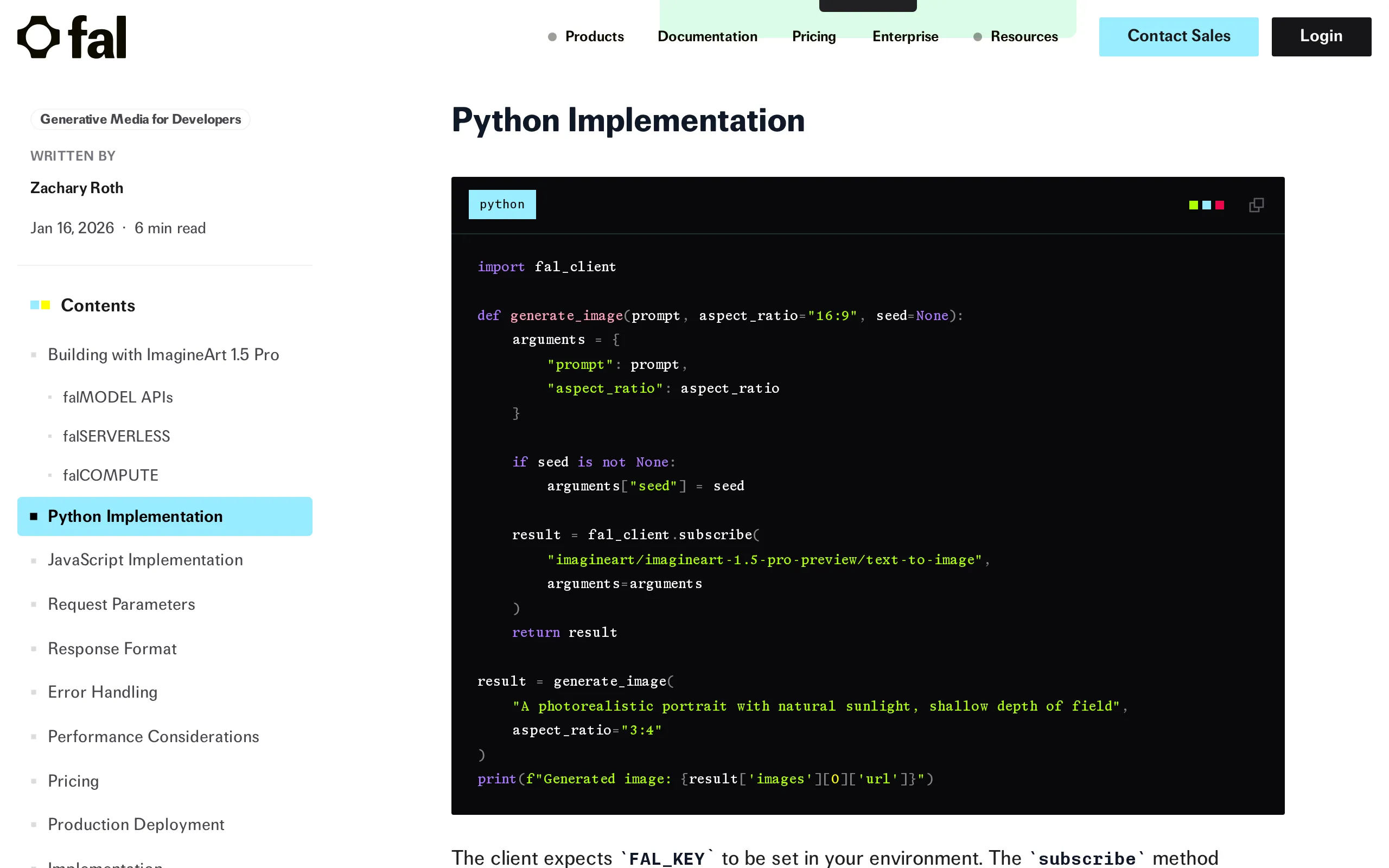
ImagineArt 1.5 Pro User Guide: API Integration
fal.ai/learn/devs/imagineart-1-5-pro-user-guide
Read the page on fal.ai: ImagineArt 1.5 Pro User Guide: API Integration
Industry report
Our team created fal's State of Generative Media report, which earned more than 1 million impressions on X.
We designed and developed State of Generative Media, Volume 1, an industry-first report on image, video and audio models, with survey data from Artificial Analysis. It covers how mature each kind of model is, how companies adopt them and what developers need to build with them.
The report also earned more than 1,000 bookmarks on X.
Traffic
fal's weekly traffic doubled within three months of working with keygrip.
Traffic climbed week by week as hundreds of pages were indexed and began to rank.
- By week 12, fal was adding more than 500 new ranking keywords a week.
- Searches for fal's brand rose more than 30%.
“We used keygrip to publish hundreds of updates and saw a significant traffic boost in weeks. Months later and the results are compounding.”
FAQ
Buyers ask these questions about fal's results and how keygrip works.
What results did fal get from keygrip's pages?
fal's weekly traffic doubled within three months of working with keygrip, and by week 12 fal was adding more than 500 ranking keywords a week. Keygrip's research found more than 3,600 keyword gaps in fal's market, and fal published the developer guides, model pages and tutorials we wrote for it. Within two months of its launch, fal.ai/learn became fal's biggest content channel.
What is fal's State of Generative Media report?
State of Generative Media, Volume 1 is an industry-first report on image, video and audio models. Our team created, designed and developed it for fal, with survey data from Artificial Analysis. On X it earned more than 1 million impressions and more than 1,000 bookmarks.
How does keygrip find keyword gaps?
Keygrip finds keyword gaps by building a keyword map of the searches your buyers make, with search volume and keyword difficulty from Ahrefs. A keyword gap is a search in that map worth targeting with a page. The URL map then assigns each important search to a page your site already has or to a new one.
Who publishes the pages keygrip writes?
Your coding agent or your developers publish each page. Keygrip delivers every page as a markdown work order over the Model Context Protocol (MCP), and an editor on our team approves each page before we release it. Your agent publishes the page and reports its live URL to keygrip, which starts tracking it.
How often does keygrip check what AI answers say about a brand?
We ask AI answers your buyers' questions every week, for every client. Each run asks GPT, Claude and Gemini, and records the Google AI Overview where Google shows one. The report shows how often the answers mention your brand and cite your site.
Get started
We update the pages already on your site as well as writing new ones.
Keygrip maps the searches your buyers make, our editors approve every page and your coding agent publishes each one.
